Full product name
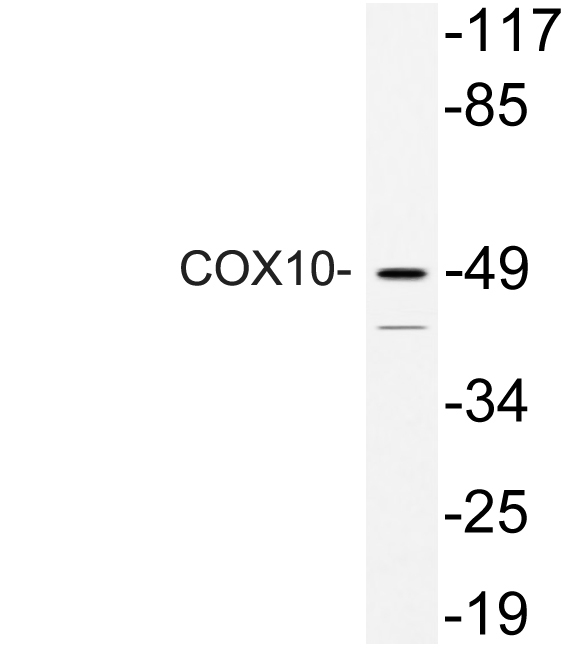
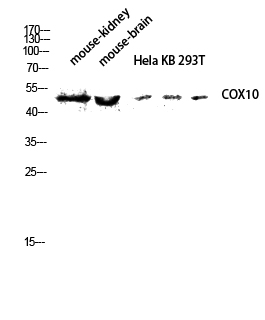
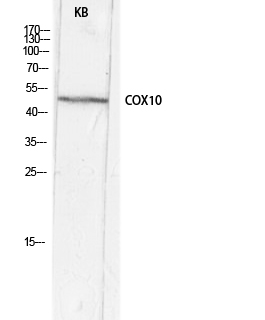
COX10 Antibody
Code
BT-AP02147
Host
Rabbit
Isotype
IgG
Size
20ul,50ul,100ul
Clonality
Polyclonal
Immunogen
The antiserum was produced against synthesized peptide derived from human COX10. AA range:98-147
Purification
The antibody was affinity-purified from rabbit antiserum by affinity-chromatography using epitope-specific immunogen.
Concentration
1 mg/ml
Formulation
Liquid in PBS containing 50% glycerol, 0.5% BSA and 0.02% sodium azide.
Storage
-20°C for one year
Background
Cytochrome c oxidase (COX), the terminal component of the mitochondrial respiratory chain, catalyzes the electron transfer from reduced cytochrome c to oxygen. This component is a heteromeric complex consisting of 3 catalytic subunits encoded by mitochondrial genes and multiple structural subunits encoded by nuclear genes. The mitochondrially-encoded subunits function in electron transfer, and the nuclear-encoded subunits may function in the regulation and assembly of the complex. COX10 encodes heme A: farnesyltransferase, which is not a structural subunit but required for the expression of functional COX and functions in the maturation of the heme A prosthetic group of COX. COX10, heme A: farnesyltransferase cytochrome c oxidase assembly factor is predicted to contain 7-9 transmembrane domains localized in the mitochondrial inner membrane. A gene mutation, which results in the substitution of a lysine for an asparagine (N204K), is identified to be responsible for cytochrome c oxidase deficiency. In addition, this gene is disrupted in patients with CMT1A (Charcot-Marie-Tooth type 1A) duplication and with HNPP (hereditary neuropathy with liability to pressure palsies) deletion.
Uniprot accession
Molecular weight
48882
Gene ID
Human: 1352
Synonyms
COX10; Protoheme IX farnesyltransferase; mitochondrial; Heme O synthase
Research area
Tags & Cell Markers
Target protein
COX10