Full product name
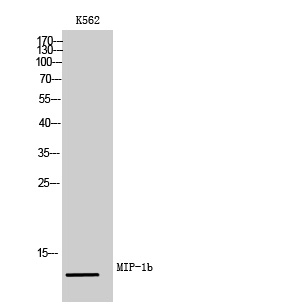
MIP-1b Antibody
Code
BT-AP05423
Host
Rabbit
Isotype
IgG
Size
20ul,50ul,100ul
Clonality
Polyclonal
Immunogen
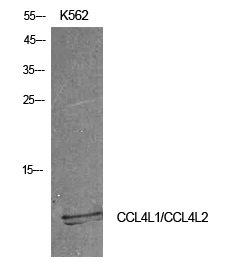
The antiserum was produced against synthesized peptide derived from the Internal region of human CCL4L1/CCL4L2. AA range:31-80
Purification
The antibody was affinity-purified from rabbit antiserum by affinity-chromatography using epitope-specific immunogen.
Concentration
1 mg/ml
Formulation
Liquid in PBS containing 50% glycerol, 0.5% BSA and 0.02% sodium azide.
Storage
-20°C for one year
Background
CCL4, also known as macrophage inflammatory protein 1 beta (MIP-1 beta ), is a 12 kDa beta chemokine that is secreted at sites of inflammation by activated leukocytes, lymphocytes, vascular endothelial cells, and pulmonary smooth muscle cells. CCL4 attracts a variety of immune cells to sites of microbial infection as well as to other pathologic inflammation such as allergic asthma and ischemic myocardium. A CCL4 deficiency in mice promotes the development of autoantibodies, possibly as a result of compromised regulatory T cell recruitment. CCL4 is secreted from activated monocytes as a heterodimer with CCL3/MIP-1 alpha. The first two N-terminal amino acids can be cleaved from human CCL4 by CD26/DPPIV. Both the full length and truncated forms exert biological activity through CCR5, and the truncated form additionally interacts with CCR1 and CCR2. In humans, the ability of CCL4 to bind CCR5 inhibits the cellular entry of M-tropic HIV-1 which utilizes CCR5 as a co-receptor. Both forms of CCL4 block HIV-1 infection of T cells by inducing the downregulation of CCR5. Mature mouse CCL4 shares 77% and 86% amino acid sequence identity with human and rat CCL4, respectively.
Uniprot accession
Molecular weight
10166
Gene ID
Human: 388372/9560
Synonyms
CCL4L1; CCL4L; LAG1; SCYA4L1; CCL4L2; CCL4L; SCYA4L2; C-C motif chemokine 4-like; Lymphocyte activation gene 1 protein; LAG-1; Macrophage inflammatory protein 1-beta; MIP-1-beta; Monocyte adherence-in
Research area
Others
Target protein
CCL4L1